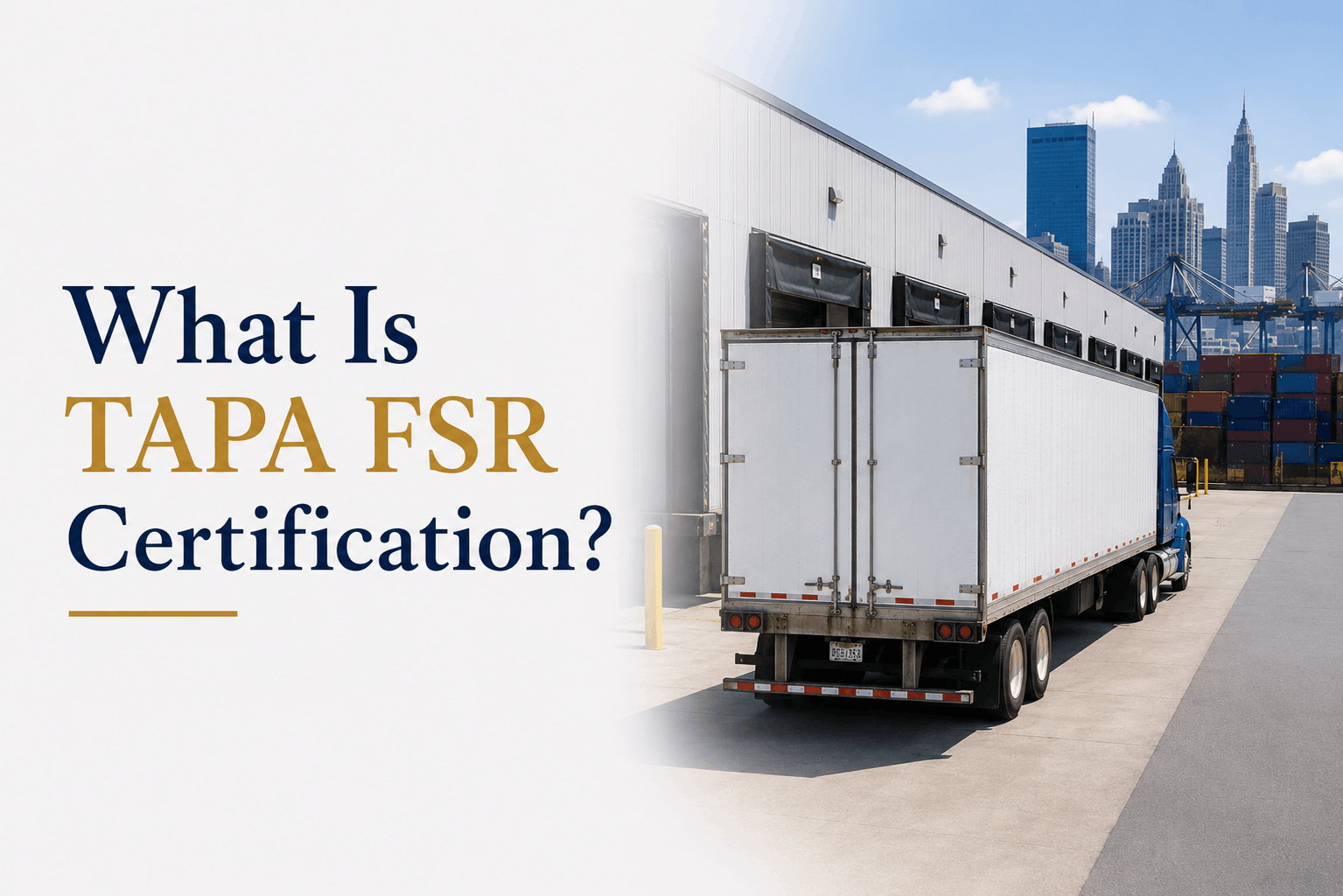
Cargo security remains a major concern across the supply chain industry. Companies that move, store, or distribute valuable goods face increasing pressure to protect cargo from theft, tampering, and unauthorized access. This need has made the TAPA FSR inspection in NJ an important standard for warehouses, logistics providers, and cargo facilities. If you are wondering what the TAPA FSR certification is, this guide explains everything Newark and New Jersey cargo operators need to know.
What Is TAPA FSR?
The Transported Asset Protection Association, commonly known as TAPA, created the Facility Security Requirements (FSR) standard to improve security across logistics and supply chain operations. The certification establishes specific requirements for facilities that handle goods during storage, transportation, and distribution. A TAPA FSR certification guide typically describes the framework as a set of security controls designed to reduce risks associated with cargo theft and unauthorized access.
Facilities that achieve certification demonstrate compliance with internationally recognized security practices. Organizations seeking a TAPA FSR inspection company in Newark, NJ, often begin by evaluating existing security measures and comparing them with TAPA requirements. The certification process focuses on physical security, access control, employee procedures, monitoring systems, and incident management practices.
Why TAPA FSR Matters for Newark, NJ: Port Newark | Newark Liberty Airport | NJ as a Cargo Theft Hotspot Stats
Newark serves as one of the most important transportation and logistics hubs in the United States. Facilities located near Port Newark and Newark Liberty International Airport handle large volumes of domestic and international freight every day. Because of the area’s strategic importance, cargo security remains a priority for logistics providers, manufacturers, and warehouse operators.
New Jersey has experienced incidents involving cargo theft over the years, making cargo theft prevention in NJ a critical topic for businesses managing valuable shipments. Companies operating in this region often pursue TAPA warehouse security in NJ standards to strengthen security programs and align with customer expectations. A professional cargo security audit in Newark can help facilities identify vulnerabilities and prepare for certification requirements.
TAPA FSR Levels A, B, C: Requirements and Differences
TAPA offers three certification levels to accommodate different operational needs and security environments. The TAPA FSR levels A B C structure allows facilities to select a certification level that matches their risk profile and security objectives.
| TAPA Level | Security Requirement | Typical Application |
|---|---|---|
| Level A | Highest security controls and compliance standards | High-risk and high-value cargo facilities |
| Level B | Moderate security requirements with strong protection measures | Regional warehouses and logistics centers |
| Level C | Foundational security controls and operational safeguards | Facilities beginning their security compliance journey |
Level A requires the most comprehensive security measures. Level B provides substantial protection while allowing some flexibility. Level C focuses on essential security practices that establish a baseline framework.
Organizations handling high-value cargo security audits in Newark operations frequently pursue higher certification levels due to customer expectations and operational risks.
TAPA FSR Audit Process
Understanding how certification works helps facilities prepare effectively. A standard TAPA FSR inspection in NJ follows a structured process designed to evaluate compliance with the selected certification level. The process usually begins with a readiness review. Security policies, operational procedures, access controls, surveillance systems, and facility layouts are examined before the formal inspection.
Auditors then conduct an on-site evaluation. During this stage, they verify that documented procedures match actual practices. Physical security measures, employee compliance, visitor controls, alarm systems, and monitoring capabilities receive detailed attention.
After the review, the facility receives findings and recommendations. Any identified gaps must be addressed before certification approval. Once compliance requirements are met, the certification can be awarded based on the selected TAPA level.
How Long Does TAPA FSR Certification Take?
Many facility managers ask, How long does TAPA FSR certification take? The answer depends on the current security posture of the facility and the certification level being pursued. Facilities with mature security programs may complete preparation and assessment within a few weeks.
Organizations that need significant upgrades may require several months to implement corrective actions and meet compliance standards. The complexity of operations, facility size, documentation readiness, and technology infrastructure all influence the overall timeline. Working with experienced professionals can help streamline the certification process and reduce delays.
What Facilities Need TAPA FSR: Electronics | Pharmaceuticals | Consumer Goods | High-value cargo
TAPA certification applies to a wide range of industries that store or transport valuable goods. Facilities involved in electronics distribution often seek certification because of the high resale value of products and increased theft risks. Pharmaceutical facilities also rely on strong security controls to protect sensitive products and maintain supply chain integrity. Consumer goods warehouses, fulfillment centers, and distribution hubs frequently pursue certification as part of broader security programs.
Manufacturing operations can also benefit from a manufacturer compliance audit in NJ when evaluating security controls and operational procedures. Businesses that manage expensive shipments often use a logistics security audit in NJ to assess compliance readiness and strengthen facility protection.
How TAPA FSR Certification Affects Insurance Premiums
Insurance providers evaluate several risk factors when determining coverage terms for cargo facilities. Security standards and documented risk management procedures often play a role in that assessment. Facilities that maintain recognized security programs may demonstrate a stronger commitment to risk reduction. Although insurers use their own evaluation criteria, documented security practices can contribute valuable information during underwriting reviews. Organizations focused on cargo theft prevention in NJ frequently consider certification as part of a broader risk management strategy that supports operational resilience and compliance objectives.
The Kent Group’s TAPA FSR Inspection Program in Newark, NJ
The Kent Group supports cargo facilities seeking compliance with international security standards. As a trusted TAPA FSR inspection company in Newark, NJ, our organization works with logistics providers, warehouses, manufacturers, and distribution centers throughout the region. Our assessment approach includes facility evaluations, compliance reviews, security gap analysis, documentation support, and certification preparation. Whether a company requires cargo audit services in Newark, NJ, or assistance with a formal TAPA FSR inspection in NJ, professional guidance can help facilities navigate certification requirements more effectively.
Book a TAPA FSR Inspection—Newark, NJ
Facilities that handle valuable cargo should regularly evaluate security controls and compliance readiness. Whether you operate a warehouse, manufacturing site, distribution center, or logistics hub, a professional security assessment can provide insight into current practices and certification requirements. If your organization is preparing for certification, considering a logistics security audit in NJ, or seeking cargo audit services in Newark, NJ, now is the time to begin the evaluation process. Schedule a professional assessment and determine your readiness for TAPA compliance.
TAPA FSR certification has become an important benchmark for cargo facilities that want to demonstrate strong security practices and operational accountability. From understanding certification levels to preparing for inspections, organizations must follow a structured approach to meet compliance requirements. Facilities throughout Newark and New Jersey continue to strengthen their security programs through recognized standards that support safer supply chain operations. The Kent Group provides experienced guidance for organizations pursuing TAPA certification and long-term security compliance. For more details, you may connect with us at 973-402-5888.
FAQs
What is TAPA FSR certification?
TAPA FSR certification is a globally recognized security standard developed by the Transported Asset Protection Association. It establishes facility security requirements for warehouses, logistics centers, and cargo operations. The certification focuses on preventing theft, unauthorized access, and security vulnerabilities. Companies use it to demonstrate compliance with industry-recognized security practices.
How long does TAPA FSR certification take?
The certification timeline varies based on the facility’s current security measures and readiness level. Some facilities complete the process within several weeks, while others require a few months. The duration depends on corrective actions, documentation, and compliance requirements. Larger facilities often need additional preparation time.
What are the differences between TAPA FSR Levels A, B, and C?
TAPA offers three certification levels based on security requirements. Level A contains the most comprehensive controls and applies to higher-risk operations. Level B includes strong security measures with moderate flexibility. Level C provides foundational security requirements for facilities beginning their compliance journey.
Who should consider a TAPA FSR inspection?
Warehouses, logistics providers, manufacturers, pharmaceutical facilities, and distribution centers often pursue certification. Any organization handling valuable or sensitive cargo can benefit from evaluating its security readiness. Facilities near major transportation hubs commonly seek certification. The process helps verify compliance with recognized standards.
Why is TAPA important for Newark cargo facilities?
Newark serves as a major logistics gateway through Port Newark and Newark Liberty International Airport. Large cargo volumes create significant security challenges for operators in the region. TAPA certification provides a structured framework for facility security. Many businesses use it to strengthen cargo protection and compliance efforts.