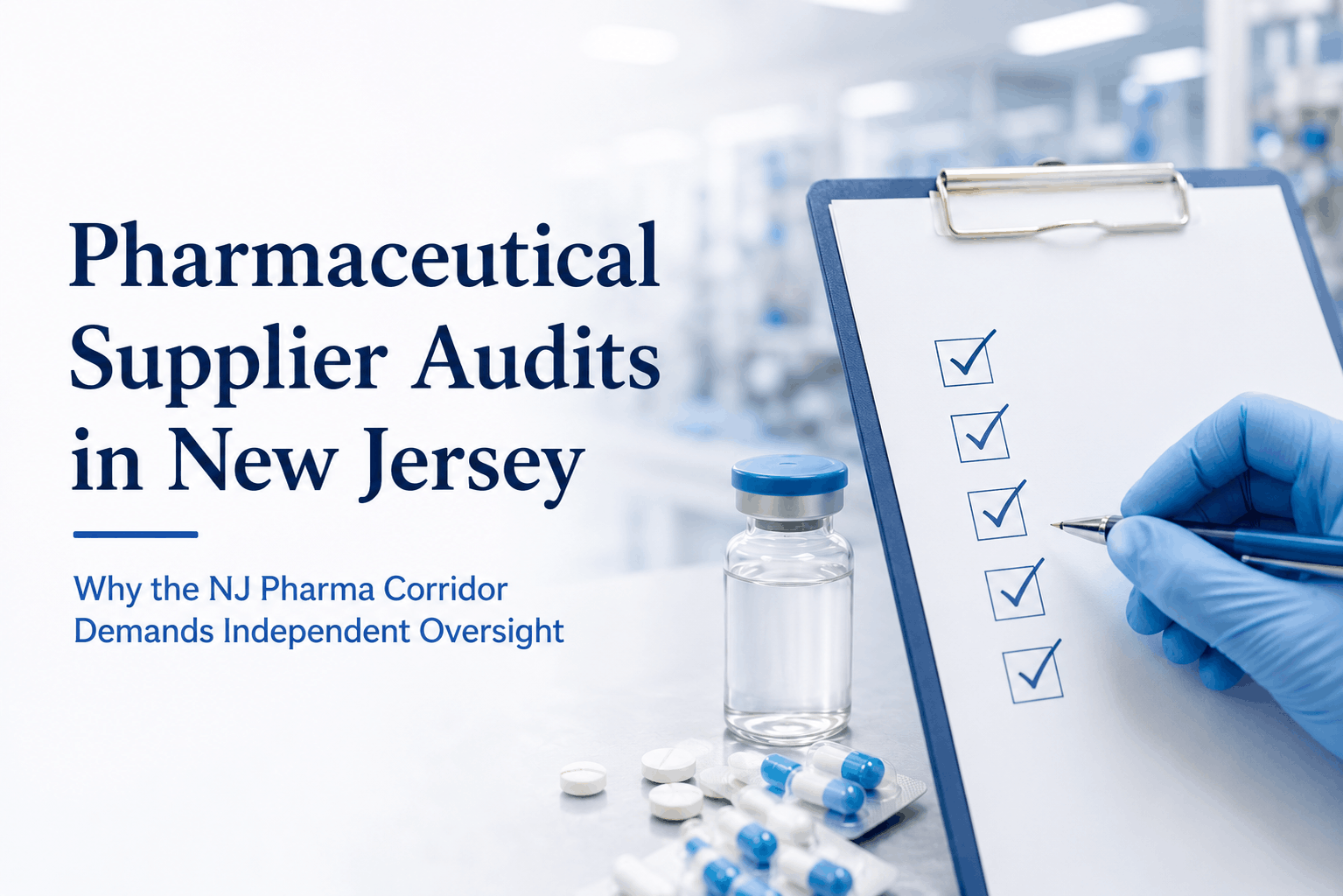
New Jersey has earned a strong reputation as the pharmaceutical capital of the United States. Some of the world’s largest pharmaceutical companies, including Johnson & Johnson, Pfizer, Merck, Novartis, and Bayer, maintain significant operations across the state. The region has developed into a highly connected pharmaceutical corridor that supports research, manufacturing, packaging, testing, and distribution activities. As regulatory expectations continue to evolve, organizations increasingly rely on a pharmaceutical supplier audit in New Jersey process to evaluate suppliers and maintain oversight throughout the supply chain.
The presence of an FDA district office in New Jersey creates an environment where regulatory compliance remains under close scrutiny. Manufacturers, suppliers, and service providers operating within this corridor face ongoing expectations to demonstrate quality, consistency, and accountability. Independent audits have become an essential part of maintaining confidence across pharmaceutical operations.
Why New Jersey is the pharmaceutical capital of the US: J&J | Pfizer | Merck | Novartis | Bayer All Have Major NJ operations.
The pharmaceutical industry depends on a network of suppliers that contribute to every stage of product development and manufacturing. Raw material providers, active pharmaceutical ingredient manufacturers, packaging vendors, laboratories, and contract manufacturers all play important roles in ensuring product quality. A comprehensive pharmaceutical compliance audit in Chicago review helps organizations examine supplier controls, documentation practices, quality systems, and manufacturing processes.
These audits provide an objective assessment of supplier performance and identify areas that require attention before they create larger compliance concerns. As pharmaceutical companies expand supplier networks and global sourcing strategies, maintaining visibility across the supply chain becomes increasingly important. Independent oversight helps organizations verify that suppliers meet established quality expectations and regulatory requirements.
What Pharma Supplier Audits Cover in NJ Operations: API suppliers | Contract manufacturers | Packaging suppliers | Lab vendors
The New Jersey pharmaceutical corridor includes a diverse range of suppliers and service providers. A typical NJ pharma supplier audit may evaluate active pharmaceutical ingredient manufacturers, packaging suppliers, laboratory testing vendors, warehousing facilities, and distribution partners. Organizations frequently conduct reviews of suppliers that support critical production activities. An API supplier audit in New Jersey focuses on manufacturing controls, material traceability, validation programs, and quality management systems.
Similarly, a contract manufacturer audit in NJ evaluation examines production operations, batch documentation, equipment qualification, and quality oversight procedures. Because supplier performance directly affects finished product quality, pharmaceutical companies must ensure that every link in the supply chain operates according to established standards.
FDA 21 CFR 211 and ICH Q10 Requirements for NJ Manufacturers
Pharmaceutical manufacturers operating in New Jersey must comply with FDA regulations, including FDA 21 CFR Part 211 requirements. These regulations establish current good manufacturing practice standards for the manufacture, processing, packing, and holding of drug products. In addition to FDA regulations, many organizations follow ICH Q10 guidance, which outlines a pharmaceutical quality system framework designed to support product lifecycle management and continual improvement. Compliance with these standards requires ongoing monitoring of suppliers and external partners.
A thorough FDA cGMP audit in New Jersey helps organizations evaluate whether suppliers maintain manufacturing controls that align with regulatory expectations. Companies also use audits to review quality documentation, training programs, deviation management systems, and corrective action procedures. Maintaining strong pharmaceutical GMP compliance in NJ practices requires continuous evaluation rather than periodic review alone. This approach supports a more complete understanding of supplier performance over time.
Data Integrity in NJ Pharma Audits (increasing FDA Focus Area)
Data integrity has become one of the most important areas of regulatory attention within the pharmaceutical industry. FDA inspections increasingly focus on the accuracy, completeness, consistency, and reliability of records generated during manufacturing and quality activities.
Audit teams often review electronic systems, laboratory records, audit trails, change controls, and documentation practices to determine whether data integrity expectations are being met.
Even minor documentation concerns can raise questions regarding the reliability of manufacturing records. As part of a broader pharma supply chain audit in NJ strategy, organizations evaluate how suppliers collect, store, manage, and protect critical quality data. This review helps ensure that information used to support manufacturing decisions remains accurate and trustworthy throughout the product lifecycle.
Why Independent Second-party Audits are Preferred to Self-audits for FDA
Many organizations conduct internal assessments as part of routine quality activities. While self-audits provide useful operational insights, independent third-party audits offer an objective perspective that can identify issues that internal teams may overlook. Regulatory agencies often view external assessments as a valuable component of supplier oversight programs because they provide unbiased evaluations of quality systems and compliance practices. Independent auditors bring experience from multiple facilities and industries, allowing them to recognize patterns, trends, and risks that may not be visible during internal reviews.
Companies seeking supplier audit services New Jersey frequently chooses third-party providers to strengthen supplier qualification programs and support ongoing compliance efforts. Independent assessments can also help organizations prepare for regulatory inspections and customer audits. Organizations that maintain quality management systems should also align supplier oversight activities with broader quality requirements, including Quality Management System Regulation modernization initiatives and evolving industry expectations.
The Role of Pharma Quality Audit in New Jersey Operations
A comprehensive pharma quality audit in New Jersey involves more than reviewing procedures and records. Auditors assess how quality systems function in practice, evaluate management commitment, and determine whether compliance activities effectively support product quality. These assessments often examine supplier qualification programs, risk management procedures, change controls, complaint handling systems, and corrective action processes. The goal is to develop a clear understanding of how suppliers manage quality throughout their operations. As pharmaceutical supply chains continue to grow more complex, organizations increasingly rely on independent evaluations to maintain transparency and regulatory readiness.
The Kent Group’s NJ pharma audit program
Organizations searching for the best pharma audit company in New Jersey often seek experienced professionals who understand pharmaceutical regulations, supplier qualification requirements, and industry best practices. The Kent Group supports pharmaceutical companies through structured audit programs designed to evaluate supplier compliance and quality system effectiveness. Their pharmaceutical supplier audit services in New Jersey, USA, includes supplier assessments, compliance evaluations, quality system reviews, and regulatory readiness support.
Get an NJ Pharma Supplier Audit
Through independent audits, organizations gain a clearer understanding of supplier performance and compliance status within the highly regulated New Jersey pharmaceutical environment. Pharmaceutical companies operating within the New Jersey corridor face increasing pressure to maintain visibility across complex supplier networks. Independent audits help organizations evaluate supplier quality systems, regulatory compliance, manufacturing controls, and data integrity practices. Companies seeking reliable pharmaceutical supplier audit services in New Jersey, USA, can work with experienced audit professionals to strengthen supplier oversight and support long-term compliance objectives. For more details, you may connect with us at 973-402-5888.
FAQs
What is included in a pharmaceutical supplier audit?
A pharmaceutical supplier audit typically reviews quality systems, manufacturing controls, documentation practices, training records, validation activities, and regulatory compliance. Auditors assess whether suppliers follow established procedures and maintain records that support product quality. The scope may vary depending on supplier type and operational risk.
How often should pharmaceutical suppliers be audited?
Audit frequency depends on supplier risk, product criticality, regulatory history, and quality performance. High-risk suppliers often require more frequent evaluations than lower-risk vendors. Organizations commonly establish audit schedules based on formal risk assessments and ongoing supplier monitoring activities.
Why is data integrity important during supplier audits?
Data integrity ensures that manufacturing and quality records remain complete, accurate, and reliable. Regulatory agencies closely examine how companies create, manage, and maintain data. During audits, reviewers assess documentation practices, electronic systems, audit trails, and record retention processes.
What regulations apply to pharmaceutical suppliers in New Jersey?
Pharmaceutical suppliers may be subject to FDA 21 CFR Part 211 requirements, applicable cGMP regulations, and industry guidance such as ICH Q10. Compliance expectations vary based on supplier activities. Audits help determine whether suppliers operate according to relevant regulatory standards and quality requirements.
Can Second-party audits support inspection readiness?
Independent audits provide an objective review of supplier quality systems and compliance practices. These assessments help identify potential gaps before regulatory inspections occur. Many organizations use external audits as part of broader supplier qualification and inspection preparedness programs.