Most safety leaders don’t lie awake worrying about the incident that’s already been reported – they worry about the one nobody’s caught yet; the forklift route that’s technically fine but feels wrong every time someone walks past it, the chemical storage area that’s “been like that for years.” EHS audit services exist for exactly that gap: the space between what a policy says on paper and what’s actually happening on the floor. In 2026, with regulatory priorities shifting and operational risk getting more tangled by the year, bringing in an outside set of eyes isn’t a nice-to-have anymore. It’s how organizations catch problems before an inspector, or worse, an incident, catches them first.
What Is an EHS Audit?
Strip away the jargon and an EHS audit is pretty simple: someone comes in and checks how your organization is actually handling environmental, occupational health, and workplace safety, and measures that against the regulations, internal policies, and standards you’re supposed to be meeting.
It’s easy to assume that means someone walking around with a clipboard hunting for things to write up. In practice, a good audit is more interested in the system behind the conditions; how well hazards get identified, how consistently risks get controlled, whether training actually sticks, and whether the whole thing still works six months after the auditor’s gone home.
Environmental, Health & Safety Audit Defined
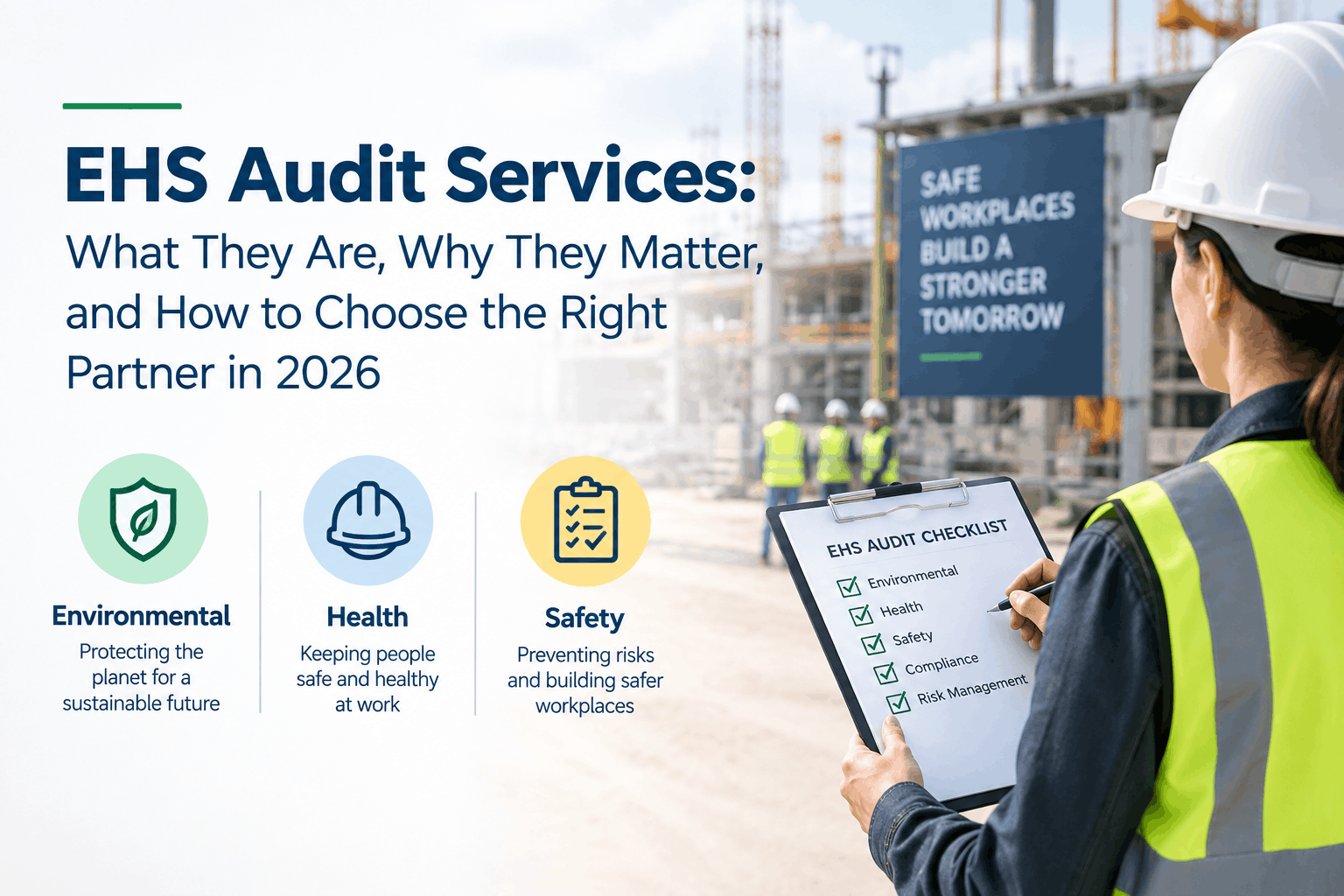
An environmental, health, and safety audit touches a lot of ground. On the environmental side, that might mean waste management, chemical storage, spill prevention, emissions, wastewater, and the paperwork trail behind all of it. On the health and safety side, it can mean PPE, machine guarding, ergonomics, hazard communication, emergency preparedness, and exposure controls.
The real point isn’t a checklist of what’s wrong. A good audit tells you how wrong, the severity, the root cause, and what it actually means for operations, so leadership can decide what to fix first instead of guessing. That’s what separates a useful audit from a stack of paper nobody reads twice.
Internal Audits vs. Second-party EHS Audit Services
Internal audits have their place. The people running them know the facility, the equipment, and the shortcuts everyone’s been taking since before the current supervisor started. That familiarity is also the problem; it’s hard to flag a condition as risky once you’ve walked past it every day for two years.
That’s where a Second-party EHS audit company earns its keep. External auditors aren’t invested in defending how things have always been done. They can measure a facility against regulatory requirements and industry norms with a clean slate, and for organizations running multiple sites or working with a web of suppliers, that outside consistency is hard to replicate internally.
Why EHS Audit Services Matter in 2026
The compliance landscape hasn’t slowed down, and neither has the pressure on organizations to show – not just claim – that risk is under control. An audit is often the thing that pushes a company from reacting to incidents toward actually getting ahead of them.
Rising OSHA Enforcement and Regulatory Scrutiny
OSHA hasn’t backed off in 2026. The agency renewed its National Emphasis Program for warehousing and distribution centers- which keeps the spotlight on powered industrial trucks, material handling, walking-working surfaces, heat, ergonomics, and fire protection. Its indoor and outdoor heat hazard program got an update too.
That turns an EHS compliance audit into something with real teeth; a chance to find the weak spots in your hazard controls before OSHA does, or before someone gets hurt trying to work around them. And the stakes for waiting are real: OSHA’s maximum penalties in 2026 still climb as high as $16,550 for serious violations and $165,514 for willful or repeated ones. Companies that build OSHA compliance audit services into their routine tend to find these issues months ahead of an inspector, not the week after.
Insurance Premiums and Risk Reduction
Insurers aren’t just looking at your claims history anymore; they’re looking at your controls, your training programs, your documentation, and whether any of it is actually enforced day to day. An audit won’t hand you a lower premium on its own, but it builds the kind of risk profile insurers take seriously.
What a structured audit really does well is surface the patterns: the same hazard showing up at three different sites, a corrective-action list that never quite gets closed out, documentation that exists in theory but not in practice. Fixing those patterns lowers both the odds and the severity of a future incident, and shows underwriters that someone is actually paying attention.
Protecting Brand Reputation and Supply Chain Continuity
One serious safety or environmental event can stall production, delay shipments, invite regulators in, and strain a customer relationship that took years to earn. And it doesn’t stay contained to your own building anymore; a supplier’s bad day has a way of becoming your bad day, especially now that customers expect companies to understand conditions further down the supply chain, not just at their own dock.
Independent auditing is what makes that visibility possible in the first place. The Kent Group, for instance, runs supplier audits across North America, Africa, South America, the Middle East, and Asia, giving organizations a real read on supplier performance and compliance even when operations are spread across wildly different regulatory environments.
Types of EHS Audits We Conduct
Compliance Audits (OSHA, EPA, ISO 45001 / ISO 14001)
Compliance audits measure policies and real-world conditions against what’s actually required: OSHA standards, EPA obligations, ISO 45001 for occupational health and safety, ISO 14001 for environmental management, or some mix of all four depending on the operation.
A solid environmental health and safety audit checklist typically covers permits, training, emergency response, hazardous materials, waste streams, inspections, incident records, PPE, machine safety, chemical controls, and required documentation. The mistake is treating that checklist as generic. It should be built around your facility, not pulled off a shelf.
Industrial Hygiene Audits
Industrial hygiene audits zero in on the exposures that affect employee health over time: chemical exposure, airborne contaminants, noise, heat stress, ventilation, ergonomics, respiratory protection, and other occupational hazards that don’t always announce themselves right away.
Finding the exposure is only step one. The more useful question is whether the monitoring programs, engineering controls, administrative controls, PPE, and training around it are actually working together, or just existing next to each other on paper.
Process and Performance Audits
Process audits ask a simpler question: do people actually understand and follow the procedures that are written down? Performance audits go a step further and ask whether those procedures are producing the results they’re supposed to, and whether the critical variables are staying inside acceptable limits.
This matters most in manufacturing and supplier settings, where a small deviation in process can quietly chip away at safety, quality, and production efficiency all at once, long before it shows up as a customer complaint.
What Happens During an EHS Audit? (Step-by-Step)
A good audit isn’t improvised. It follows a method, so the findings hold up and actually lead somewhere.
Pre-Audit Planning and Document Review
It usually starts before anyone sets foot on site: defining the scope, the objectives, the locations, the applicable standards, and the areas of highest risk. Auditors review policies, permits, training records, incident reports, inspection logs, prior audit findings, corrective actions, and whatever else makes up the management system.
That groundwork matters because it keeps the audit team focused on what’s actually risky instead of burning hours on low-priority paperwork. It also tends to surface recurring findings, the kind that point to a systemic issue rather than a one-off mistake.
On-Site Inspection and Employee Interviews
Once the auditors are on-site, they’re comparing what’s written down against what’s actually happening; walking the floor, checking equipment, chemical storage, emergency exits, production processes, waste handling, PPE use, signage, and everything in between.
Talking to the people doing the work adds something no document review can. Workers usually know exactly where a procedure falls apart once real production pressure hits, even if nobody’s ever asked them directly. Lining that up against the paperwork and what the auditor’s physically seeing is often where the real gaps come into focus.
Findings, Corrective Action Plans, and Final Reporting
Not every finding deserves the same level of urgency, so a good report sorts them by severity, regulatory significance, potential consequences, and how quickly they need attention. Critical deficiencies shouldn’t get buried next to minor housekeeping notes.
From there, a corrective action plan should spell out who’s responsible, what needs to happen, by when, and how it’ll be verified. A report only earns its keep if management can actually track each finding from the day it’s flagged to the day it’s closed.
How to Choose the Right EHS Audit Services Provider
Picking an auditor isn’t really a pricing exercise, even though it often gets treated like one. The provider’s qualifications, industry knowledge, geographic reach, and reporting approach shape how useful the whole engagement ends up being.
Certifications, Auditor Qualifications, and Industry Experience
Look for auditors who bring real credentials, regulatory knowledge, and hands-on experience in your specific industry; manufacturing, construction, logistics, hospitality, healthcare, and chemical operations don’t share the same risk profile, and an auditor who’s only worked in one of them will miss things in another.
It’s worth asking directly whether they understand the regulations that apply to your facilities specifically. Experienced auditors also tend to notice things a generalist wouldn’t; the kind of operational hazard you only recognize after you’ve seen it go wrong somewhere else.
Global Reach vs. Local, Responsive Expertise
A company running facilities across several countries needs consistency across borders. A regional operator usually cares more about fast response and someone who actually knows the local regulatory quirks. Neither is wrong; it’s about matching the provider’s model to your footprint.
The Kent Group maintains auditors across multiple regions while still offering local expertise alongside that broader coverage, which tends to work well for organizations coordinating supplier or facility audits across different markets at once.
Audit Technology and Reporting Capabilities
The right technology makes an audit more consistent and easier to act on: digital platforms, structured data collection, photo documentation, and dashboards that actually show management where things stand, instead of a findings report that gets filed away.
But technology should support the audit, not substitute for judgment. The strongest audits still come down to an experienced set of eyes paired with documentation that’s clear enough to act on.
What Influences EHS Audit Services Cost
There’s no flat rate that fairly represents every engagement- because the EHS audit cost depends on too many moving pieces: facility size, headcount, industry complexity, audit duration, location, number of sites, regulatory scope, and whether technical testing is involved.
Travel, industrial hygiene sampling, specialized assessments, supplier audits, document reviews, follow-up inspections, and corrective-action verification can all add to that number too. When you’re comparing proposals, it’s worth looking past the bottom-line price and asking what’s actually included.
A more thorough audit often pays for itself by catching the risks that matter and giving management something they can actually act on; not just a report that confirms what everyone already suspected.
How The Kent Group Delivers EHS Audit Services
The Kent Group builds its audit practice around independent assessments, certified auditors, technology-backed reporting, and recommendations that are meant to be used, not filed away. Its audit work spans supplier performance reviews, factory and industrial hygiene audits, quality-control inspections, process audits, performance audits, and health and safety audits.
For organizations searching for EHS audit services, that breadth matters when environmental, occupational safety, supplier performance, and operational controls all overlap, which, in practice, they usually do. The company’s approach is built around minimizing disruption to the business while still surfacing the compliance gaps and operational improvements that matter.
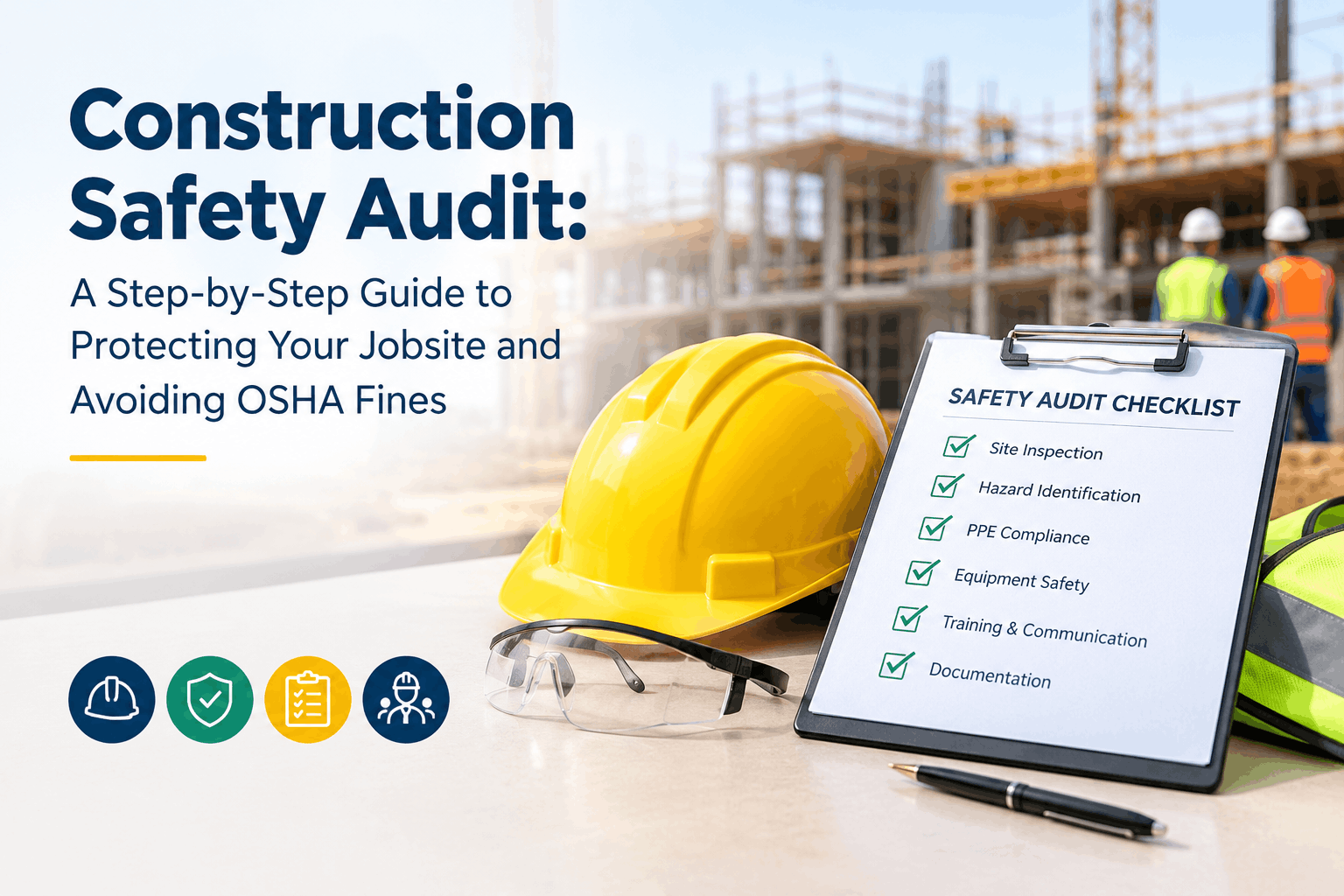
The Kent Group also handles construction safety audits, covering OSHA, ISO, and local construction requirements, along with PPE, equipment operation, hazard controls, subcontractor procedures, training records, and incident documentation.
Conclusion: Building a Proactive EHS Compliance Program
Compliance shouldn’t hinge on whether an inspector happens to notice a problem before you do. EHS audit services give organizations a real mechanism for finding hazards, testing controls, documenting what’s broken, and assigning corrective action before those problems turn into expensive ones.
Regulatory priorities aren’t going to sit still through 2026, and the safety, environmental, insurance, workforce, and supply-chain risks companies are juggling aren’t getting any simpler either. What a good audit partner really offers is independent evidence: a clear picture of what’s working and an honest one of what isn’t. The organizations that get the most out of this combine qualified auditors, genuine industry knowledge, solid technology, and reporting that people actually follow up on. That’s the difference between auditing as a once-a-year chore and auditing as something that actually protects the business.