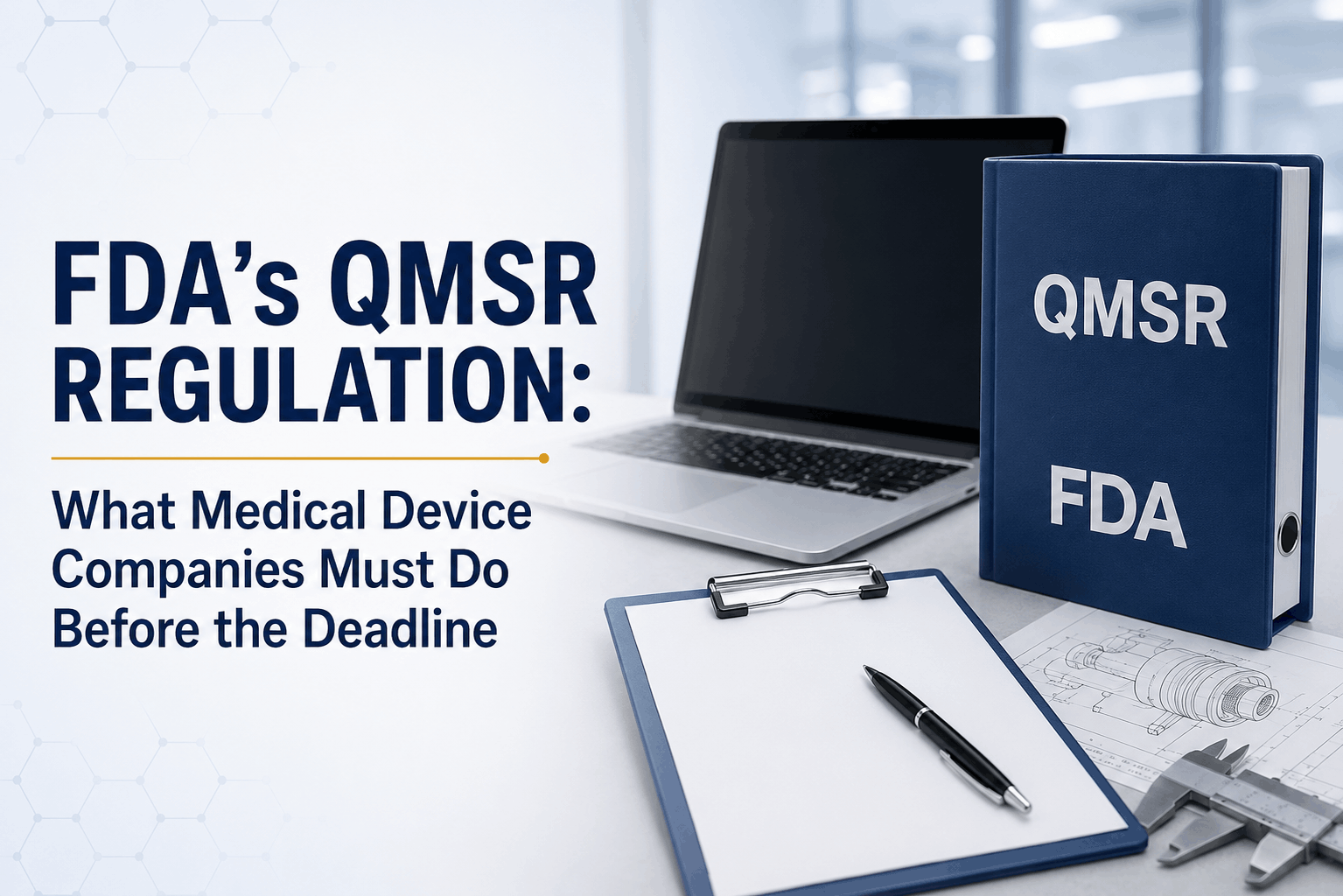
The medical device industry is entering a new regulatory era. The U.S. Food and Drug Administration (FDA) has introduced the Quality Management System Regulation (QMSR), a major update that changes how manufacturers maintain and demonstrate compliance. As the FDA QMSR deadline approaches, companies must understand what the new requirements mean and how they affect existing quality management systems. Organizations that manufacture, distribute, or supply medical devices must review their current processes and prepare for regulatory expectations. A strong focus on documentation, supplier oversight, risk management, and quality controls will play an important role in meeting FDA requirements. Understanding the transition early can help organizations move toward compliance with confidence.
What is the QMSR?
Many industry professionals ask, “What is FDA QMSR regulation?” In simple terms, QMSR is the FDA’s updated quality management framework for medical device manufacturers. The regulation incorporates key elements of ISO 13485:2016 into FDA requirements to create a more globally aligned quality system approach. The FDA introduced QMSR to modernize quality management expectations and reduce differences between U.S. and international regulations. Rather than maintaining separate systems for different markets, manufacturers can work toward a more harmonized quality management framework. Organizations involved in medical device manufacturer compliance should understand that QMSR does not eliminate FDA oversight. Instead, it updates quality system expectations while maintaining FDA authority and enforcement capabilities.
QMSR vs 21 CFR 820: Key Changes
Many manufacturers want to know, “How does QMSR replace 21 CFR 820?” The FDA has revised its quality system framework by incorporating ISO 13485 concepts while preserving certain FDA-specific requirements.
| Quality Area | 21 CFR 820 | QMSR Approach |
|---|---|---|
| Design Controls | Detailed FDA-specific requirements | Integrated with ISO 13485 processes |
| Risk Management | Limited references | Greater emphasis throughout the quality system |
| Process Validation | Separate validation requirements | Closer alignment with international standards |
| Complaint Handling | FDA-focused procedures | Harmonized approach with continued FDA reporting obligations |
The discussion around QMSR vs. 21 CFR 820 often centers on harmonization. Manufacturers that already follow ISO 13485 may find the transition more manageable, although FDA-specific obligations still apply.
Medical Device Supplier Audit Requirements Under QMSR
A medical device supplier audit remains an essential component of quality system compliance. Suppliers contribute directly to product quality, safety, and regulatory performance. Under QMSR, organizations must demonstrate that suppliers meet established quality requirements and consistently provide compliant products and services. Companies should establish documented supplier qualification procedures, monitor supplier performance, and maintain records that support regulatory expectations. Internal teams often use a medical device supplier audit to identify risks before they affect manufacturing operations or product quality. As regulatory scrutiny increases, supplier management programs must become more structured and evidence-based. Organizations should review supplier controls well before FDA inspections occur.
How QMSR aligns with ISO 13485:2016 (and why that matters)
One of the most significant aspects of the regulation is ISO 13485 QMSR alignment. The FDA recognized that many medical device companies already operate within ISO-certified environments. By aligning regulatory expectations with ISO 13485:2016, the agency aims to create consistency across global markets. This alignment encourages organizations to maintain quality management systems that satisfy both international and U.S. regulatory expectations. However, alignment does not mean automatic compliance. Companies must verify that all FDA-specific requirements remain properly addressed. Organizations should conduct a medical device quality system audit to identify gaps between current practices and new QMSR expectations. Gap assessments provide valuable insight into areas that may require updates before enforcement activities increase.
Compliance Readiness Checklist
Organizations preparing for FDAQMSR compliance in 2024–2025 should complete several important readiness activities.
- Review current quality management procedures against QMSR requirements.
- Assess supplier qualification and monitoring processes.
- Evaluate risk management documentation and controls.
- Verify complaint handling procedures and reporting practices.
- Review design control documentation and product lifecycle records.
- Confirm process validation activities remain current and documented.
- Conduct internal audits to identify compliance gaps.
- Prepare management review records and quality metrics.
- Train employees on updated regulatory expectations.
- Schedule independent assessments before regulatory inspections.
Completing these activities helps organizations understand where improvements may be necessary before enforcement deadlines arrive.
Timeline: FDA Enforcement Dates and Supplier Audit Prep Windows
The FDA has established a transition period to help manufacturers prepare for the new requirements. Companies should use this time strategically to review procedures, update documentation, and strengthen supplier oversight programs. Many organizations are currently focusing on FDA QMSR compliance 2024–2025 initiatives to ensure readiness before full enforcement expectations take effect. Waiting until the final stages of implementation can create unnecessary compliance challenges and increase operational risk. Supplier evaluations should begin early. Conducting a medical device supplier audit during the preparation phase provides valuable information regarding supplier performance, documentation quality, and process consistency.
Why Independent Supplier Audits are Critical for QMSR Compliance
Independent audits provide an objective assessment of quality system effectiveness. External auditors often identify issues that internal teams may overlook due to familiarity with existing processes. Organizations seeking stronger compliance programs frequently incorporate second-party reviews into their quality strategies. A medical device quality system audit conducted by experienced professionals can reveal documentation gaps, supplier risks, and process weaknesses before regulatory inspections occur. Companies operating in different regions may also benefit from specialized services such as medical device audit services in Chicago and medical device audits in NJ. Regional expertise can support organizations that need assistance evaluating facilities, suppliers, or quality systems while preparing for QMSR requirements. Independent assessments provide valuable evidence of ongoing compliance efforts and demonstrate a proactive commitment to regulatory readiness.
The Kent Group’s Medical Device Audit Program
As organizations navigate changing regulatory expectations, professional audit support becomes increasingly important. The Kent Group provides services designed to help manufacturers evaluate their quality systems, supplier controls, and compliance readiness. The company works with organizations seeking medical device audit services in Chicago as well as businesses requiring medical device audit in NJ support. Their audit programs focus on identifying potential compliance gaps and reviewing quality system performance against applicable regulatory standards. Companies looking for an FDA QMSR medical device audit company often seek experienced professionals who understand both FDA expectations and international quality management requirements. Independent assessments can support preparation efforts and help organizations strengthen compliance strategies before inspections occur.
Get a QMSR Compliance Audit
The transition to QMSR represents a significant regulatory change for the medical device industry. Organizations should not wait until enforcement actions increase to evaluate their readiness. Reviewing supplier controls, quality management procedures, risk management processes, and documentation systems now can help ensure a smoother transition. If your organization is preparing for the FDA QMSR deadline, consider scheduling an independent compliance assessment. A comprehensive audit can identify potential gaps and provide actionable insights that support ongoing regulatory preparedness. Contact The Kent Group today to discuss your QMSR readiness strategy and compliance evaluation needs. For more details, you may connect with us at 973-402-5888.
FAQs
1. What is the main purpose of FDA QMSR?
The FDA created QMSR to modernize medical device quality system requirements and align them more closely with ISO 13485:2016. The regulation aims to improve consistency between U.S. and international quality management expectations. Manufacturers must still comply with FDA-specific obligations. The overall goal is stronger regulatory harmonization.
2. How does QMSR replace 21 CFR 820?
QMSR updates the previous quality system framework by incorporating ISO 13485 principles into FDA regulations. While many concepts remain familiar, the new approach emphasizes alignment with internationally recognized quality management standards. FDA oversight and enforcement authority continue to apply. Companies must review all updated requirements carefully.
3. Why are supplier audits important under QMSR?
Suppliers play a critical role in medical device quality and safety. Audits help organizations evaluate supplier performance, identify risks, and verify compliance with established requirements. Effective supplier oversight supports overall quality management objectives. Proper documentation is also essential during regulatory inspections.
4. Who should conduct a medical device quality system audit?
Internal quality teams can perform routine assessments, but many organizations also use independent auditors. External auditors provide objective evaluations and may identify issues that internal teams overlook. Independent reviews can strengthen compliance preparation efforts. They are particularly valuable during major regulatory transitions.
5. When should companies start preparing for QMSR compliance?
Organizations should begin preparation as early as possible. Reviewing procedures, conducting audits, evaluating suppliers, and updating documentation often requires significant time and resources. Early planning helps reduce compliance risks and supports smoother implementation. Proactive preparation also improves inspection readiness.