As manufacturers prepare for another business cycle, compliance, workplace safety, and operational risk management become major priorities. A thorough year-end compliance review helps organizations identify gaps, verify regulatory adherence, and strengthen internal controls before entering a new year. In industries where supplier performance, operational continuity, and safety standards directly affect production, audits play a critical role in long-term planning.
Manufacturers facing growing supply chain challenges in 2026 must pay close attention to environmental, health, and safety requirements. An effective EHS audit checklist for manufacturers provides a structured approach to evaluating workplace conditions, documentation practices, training records, and regulatory compliance. Understanding what should an EHS audit include? It is essential for companies seeking to maintain safe operations and minimize compliance risks.
Why Year-end is the Perfect Time for an EHS Audit (Budget Reset, Compliance Year Close)
Manufacturing environments involve complex processes, equipment, chemicals, contractors, and supply chain partners. As businesses review supplier performance and operational risks, internal audits become an important part of preparation for the coming year. Many organizations rely on EHS audit services to assess current practices and identify areas requiring corrective action.
The connection between workplace safety and supply chain reliability has become increasingly important. When manufacturers conduct a detailed year-end review, they gain a clearer understanding of operational vulnerabilities that could impact production schedules, supplier relationships, and regulatory obligations.
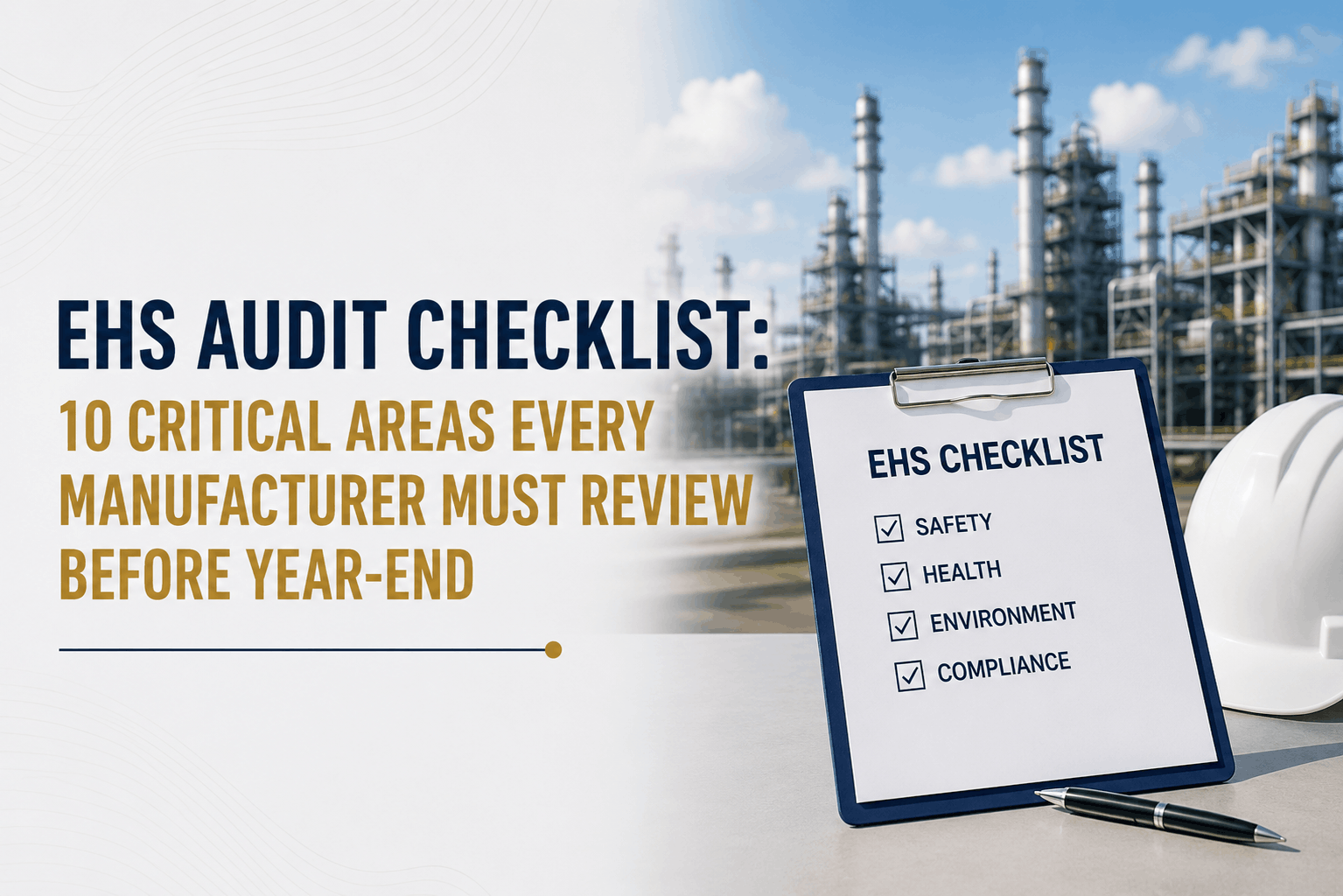
10-Point EHS Audit Checklist:
- OSHA 300 Log accuracy and completeness
- Safety program documentation (PPE, HazCom, LOTO)
- Emergency response plan review and drill records
- Employee safety training records (completeness)
- Equipment inspection and maintenance records
- Chemical inventory and SDS management
- Industrial hygiene sampling records (air, noise, chemicals)
- Environmental compliance (emissions, waste, spills)
- Contractor and subcontractor safety compliance
- Incident investigation and corrective action closure
Safety program documentation (PPE, HazCom, LOTO)
One of the first areas within an EHS audit checklist for 2026 is documentation management. Manufacturers should review permits, inspection reports, incident logs, corrective action records, and employee training documentation. Missing or outdated records often create compliance concerns during regulatory inspections. Documentation reviews also help organizations evaluate whether safety procedures align with current operational activities. Accurate records support transparency and demonstrate an ongoing commitment to compliance requirements throughout the year.
OSHA 300 Log accuracy and completeness
An effective OSHA compliance audit should assess how well a facility follows federal and state workplace safety regulations. Manufacturers should examine hazard communication programs, lockout/tagout procedures, machine guarding measures, and personal protective equipment requirements. Auditors often compare existing practices against regulatory expectations to identify deficiencies before they become larger issues. Conducting an internal review before year-allows organizations to address findings proactively and maintain regulatory readiness.
Emergency response plan review and drill records
Physical workplace inspections remain a key component of every workplace safety audit checklist. Manufacturing facilities should evaluate production areas, storage locations, loading docks, maintenance shops, and employee workstations. Inspectors commonly assess housekeeping practices, emergency exits, fire protection systems, equipment conditions, and exposure risks. Identifying hazards before the start of a new year supports stronger operational planning and safer workplace management.
Employee safety training records (completeness)
Training effectiveness directly impacts workplace performance and regulatory compliance. A comprehensive EHS audit checklist for manufacturers should verify that employees receive required safety instructions and understand emergency procedures. Training records should demonstrate participation, completion dates, and refresher requirements. Auditors often evaluate whether employees can apply safety procedures correctly in real workplace situations. Consistent training supports compliance objectives while helping organizations maintain operational standards.
Equipment inspection and maintenance records
Environmental obligations continue to evolve across manufacturing sectors. During a year-end compliance review, organizations should examine waste management practices, emissions monitoring programs, spill prevention measures, and environmental reporting procedures. Facilities should verify that permits remain current and that monitoring activities meet applicable requirements. Environmental reviews help manufacturers understand potential regulatory risks while preparing for future operational demands and sustainability expectations.
Chemical inventory and SDS management
As supply chain risks become more significant in 2026, manufacturers should evaluate contractor and supplier safety performance as part of their overall compliance strategy. Organizations increasingly recognize that external partners can influence operational continuity and workplace risk levels. Many companies include supplier assessments within broader EHS audit services programs to ensure contractors meet organizational expectations. Reviewing contractor qualifications, incident histories, and safety documentation helps create greater visibility across the supply chain.
Industrial hygiene sampling records (air, noise, chemicals)
Manufacturers seeking continual improvement often use an ISO 45001 audit checklist to evaluate occupational health and safety management systems. This review examines leadership involvement, risk assessment processes, employee participation, and performance monitoring activities. ISO-based evaluations encourage organizations to examine whether safety objectives align with broader business goals. These assessments also support stronger management oversight and more effective compliance planning for future operations.
Environmental compliance (emissions, waste, spills)
Facilities must ensure emergency plans reflect current operations and facility layouts. Testing response procedures and evaluating readiness levels help organizations identify weaknesses before actual emergencies occur. Strong preparedness supports operational resilience and regulatory compliance efforts.
Incident investigation and corrective action closure
Emergency preparedness remains an essential component of any annual safety audit. Manufacturers should review evacuation procedures, emergency communication plans, first aid resources, and incident response protocols.
Contractor and subcontractor safety compliance
A complete OSHA compliance checklist manufacturer review should assess how safety programs function in daily operations. Auditors should evaluate reporting processes, corrective action tracking, management reviews, and employee involvement initiatives.
Performance measurement provides insight into whether safety programs achieve intended objectives. Organizations can use findings to prioritize improvements, allocate resources effectively, and strengthen compliance strategies for the upcoming year.
How The Kent Group Conducts Year-end EHS Audits
Manufacturers entering 2026 face increasing pressure to manage workplace safety, environmental responsibilities, and supply chain risks simultaneously. A structured EHS audit checklist 2026 provides a practical framework for evaluating compliance performance before the year concludes. Organizations like The Kent Group conducting a thorough OSHA compliance audit, can identify weaknesses, review supplier risks, assess training effectiveness, and strengthen safety management systems. A detailed year-end EHS compliance review company process helps ensure that critical compliance areas receive appropriate attention before new operational goals begin.
Geographic coverage: Houston | Chicago | NJ | Florida
Many manufacturers operate across multiple locations and require consistent compliance oversight. Organizations often seek support through EHS audit services in Houston, Texas, when addressing regional regulatory requirements and operational risks. Similar needs exist for companies working with EHS audit services in Chicago, NJ, and Florida to maintain standardized audit processes across diverse facilities. Regional expertise helps manufacturers understand local requirements while supporting broader compliance objectives. As regulatory expectations continue to evolve, experienced auditors can provide valuable insights into emerging risks and operational challenges.
Schedule Your Year-End EHS Audit
Manufacturers seeking a more effective approach to compliance management should consider professional audit support before year-end. Experienced auditors can evaluate operational risks, review safety programs, assess supplier-related concerns, and provide recommendations aligned with industry requirements. The Kent Group helps organizations navigate complex compliance challenges through comprehensive assessments designed to support informed decision-making and stronger operational readiness. For more details, you may connect with us at 973-402-5888.
FAQs
What should an EHS audit include?
An EHS audit should include reviews of workplace safety programs, environmental compliance activities, employee training records, hazard assessments, emergency preparedness plans, and documentation management. It should also evaluate corrective action processes and regulatory compliance requirements. The goal is to identify gaps and verify program effectiveness.
Why is a year-end EHS compliance review important?
A year-end review helps manufacturers assess compliance performance before entering a new business cycle. It allows organizations to identify unresolved issues, update records, and verify that safety and environmental programs remain effective. The review also supports planning for future regulatory requirements and operational objectives.
How often should manufacturers perform an annual safety audit?
Most manufacturers conduct an annual safety audit at least once each year. Additional audits may occur following major operational changes, incidents, or regulatory updates. Regular reviews help organizations maintain compliance and evaluate whether safety management systems continue to function effectively.
How does an OSHA compliance checklist manufacturer review support compliance?
An OSHA compliance review examines workplace practices against applicable safety regulations. Auditors evaluate hazard controls, employee training, machine safety measures, and documentation requirements. The process helps organizations identify potential deficiencies and improve regulatory readiness before inspections occur.
Can supplier assessments be included in EHS audits?
Yes, many manufacturers incorporate supplier and contractor evaluations into broader EHS audit programs. Reviewing external partners helps organizations understand risks that may affect operational continuity and workplace safety. Supplier assessments also support stronger supply chain oversight and compliance management efforts.