
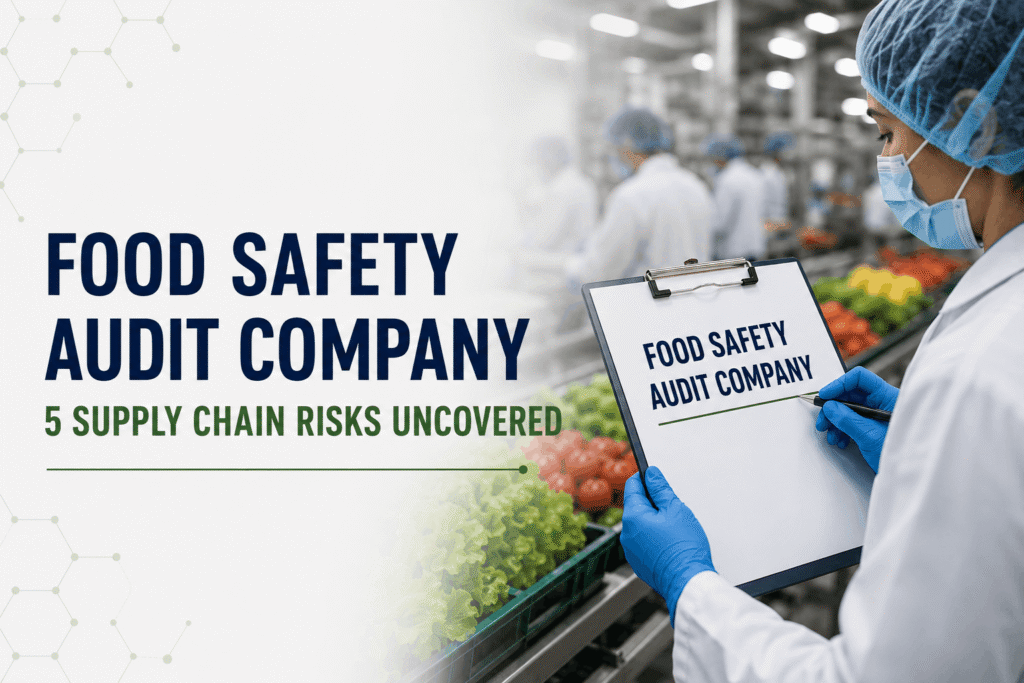
One bad ingredient, one missed temperature, or one packaging defect can trigger a recall, regulatory action, and brand damage that lasts for years. For food manufacturers and retailers, the question isn’t whether to audit suppliers, but how often and how deeply.
Internal teams know their own operations well, but they have blind spots. A second-party audit, conducted by an outside firm on your behalf to evaluate your suppliers, brings fresh eyes and a checklist shaped by hundreds of past audits. Partnering with an experienced food safety audit company in Houston ensures that your regional and national supply networks face rigorous, unbiased evaluation. The Kent Group has run these audits for major food manufacturers, including Nestle, Land O’ Lakes, and other Fortune 125 food companies, covering packaging, storage, distribution, and safety across the U.S., Canada, and Mexico.
Here are five risks these audits consistently uncover.
1. Sanitation Gaps
Cleaning logs can look perfect while the actual practice has quietly drifted. Auditors find allergen cross-contact, biofilm on hard-to-reach surfaces, and sanitizer that’s been diluted below effective levels. ATP swabs and allergen testing often tell a different story than the paperwork. If your Gulf Coast processing partners are struggling with these environmental hazards, partnering with a dedicated food safety audit company in Houston can help identify and rectify sanitation oversights before products ship.
2. Supplier-of-Supplier Risk
Most food companies audit their direct suppliers. Few have visibility two tiers up. A bakery audits its flour mill, but who checks the farms? Custom audit checklists can follow ingredients further upstream, where the biggest hidden risks usually live. Conducting a rigorous supplier quality audit across these deeper tiers ensures that raw material vulnerabilities do not compromise your finished goods.
3. Documentation That Doesn’t Match Practice
FSMA, HACCP, SQF, and BRCGS all rely on documented procedures. Auditors regularly find well-written procedures that no longer match what the plant actually does. Equipment changes, staff turnover, and the procedure quietly stop being followed. When local facilities fall behind on paperwork compliance, scheduling an independent food safety audit in New Jersey or other major logistical corridors can quickly realign floor operations with federal regulations.
4. Cold Chain Failures
Refrigerated and frozen products are most vulnerable during transitions like docks, transfers, and last-mile delivery. Auditors check dock seal condition, door dwell times, monitoring equipment calibration, and what happens when a temperature reading goes out of spec. A facility that logs temperatures hourly but has no response procedure has a real control gap. For Midwestern distributors managing high-volume cold storage, utilizing a specialized food safety audit company in Chicago provides an objective assessment of temperature-controlled transit vulnerabilities.
5. Foreign Material Controls
Metal detectors and X-ray systems only work if they’re calibrated, tested correctly, and have functioning reject mechanisms. Auditors regularly find expired calibrations, worn test pieces, and unsecured reject bins. These are the controls that separate a normal production day from a recall. Whether you are auditing a local packing house or coordinating a broader supply chain audit in Houston, validating these physical defense mechanisms is crucial for consumer safety.
What Strong Audit Programs Do
The most effective programs share three habits:
- Use custom checklists matched to each supplier’s risks, not generic templates
- Mix announced and unannounced audits to see both the prepared and the routine state
- Feed findings into supplier scorecards so audits drive improvement, not just compliance
If your supplier audit program hasn’t been refreshed in the past year, a second-party audit is one of the most cost-effective investments in brand protection available. As a leading food safety audit company in Houston, we help businesses establish robust metrics that transform standard compliance checks into data-driven protective measures. The cost is a fraction of a single recall, and the insight lasts well beyond the audit day.
Specialized Inspection Frameworks
To maintain comprehensive oversight, companies must look beyond standard checklists and implement a rigorous supplier quality audit protocol that dynamically adapts to seasonal risks. For example, brands sourcing agricultural products or seafood from the Southeast frequently deploy professional supplier audit services in Florida to verify cold-chain compliance and moisture control standards at the source.
Similarly, industrial hubs require localized expertise; establishing a routine supply chain audit in Houston allows manufacturers to secure bulk ingredient pathways moving through major shipping ports.
Furthermore, balancing these southern checks with assessments from a food safety audit company in Chicago or scheduling a comprehensive food safety audit in New Jersey ensures complete coverage across all major U.S. distribution networks.
Final Words
Ultimately, establishing an aggressive, independent compliance framework across your distribution channels is the single most effective insurance policy an enterprise food brand can hold. Relying on generic, self-reported vendor questionnaires leaves your brand exposed to hidden physical contaminants, documentation mismatches, and devastating structural liabilities.
Securing this high level of supply chain insulation requires a specialized auditing partner capable of deploying certified lead inspectors to key transit corridors simultaneously. To protect variable agricultural inputs or high-risk proteins at the source, executing a proactive supply chain audit in Houston must be paired with specialized supplier audit services in Florida to verify early-stage temperature control. Simultaneously, maintaining complete structural oversight means tracking shipments as they move through northern processing centers under the guidance of a food safety audit company in Chicago.
Investing in comprehensive, multi-site verification protects your legal compliance, insulates your financial assets, and delivers the uncompromised quality that your consumers demand.
Partner with The Kent Group
The Kent Group can have a certified auditor on site within 72 hours and can manage programs ranging from a single audit to 500 or more. Our reputation as a trusted food safety audit company in Houston stems from our ability to deploy experienced, local inspectors who understand regional supply chain complexities.
Additionally, if your operations extend into the Midwest, our experienced food safety audit company Chicago team stands ready to standardize evaluations across your regional co-packers. For businesses with East Coast or Southern footprints, we seamlessly blend our localized services—whether that involves executing an urgent food safety audit in New Jersey or coordinating multi-site supplier audit services in Florida—into a single, unified reporting dashboard.
Custom checklists can be modified within 24 hours to address regional concerns, ingredient changes, or supplier history. To ensure absolute compliance, let our team design a tailored compliance program. As a leading food safety audit company in Houston, we build strategic systems that mitigate risk, protect your consumers, and reinforce your brand’s integrity.
Call 973.402.5888 for a free consultation.